
Agentic AI is Reshaping the Future of CPU Demand

Updated: May 9
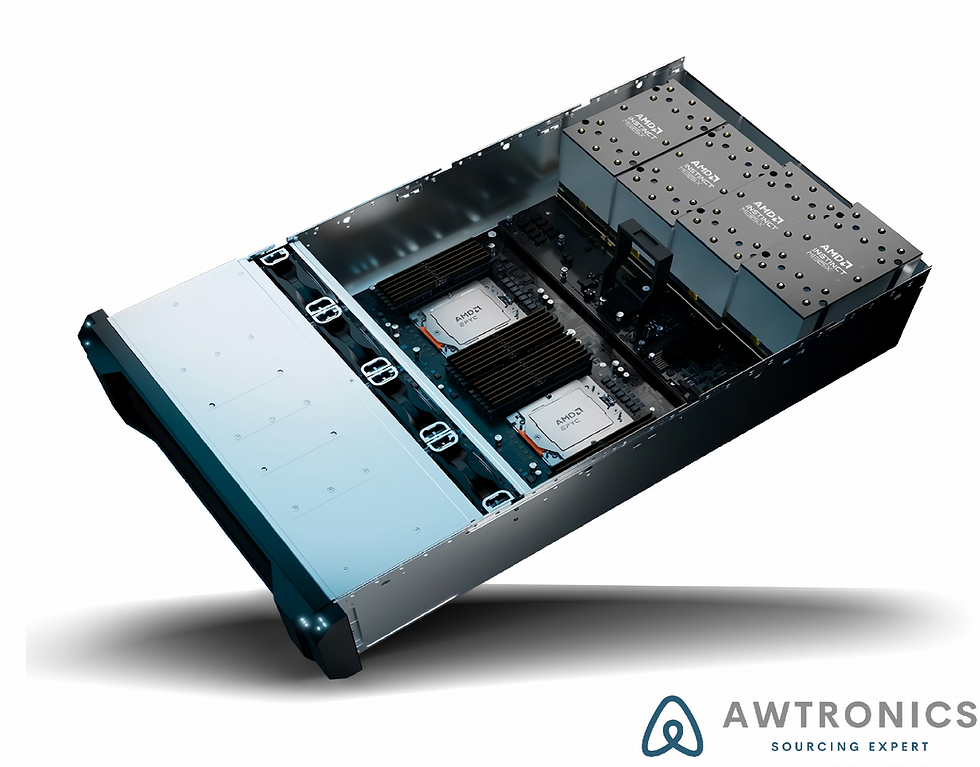
The AI industry is entering a new era.
For the past few years, most AI infrastructure discussions focused heavily on GPUs. Traditional chatbot AI workloads were designed around GPU-centric architectures, where CPUs mainly handled scheduling and system management.
But with the rise of Agentic AI, the infrastructure equation is changing rapidly.
Unlike conventional chatbot AI, agentic systems are designed to plan, reason, execute tasks, connect APIs, retrieve memory, validate outputs, and continuously interact with enterprise workflows. This dramatically increases the importance of CPU computing power inside modern AI infrastructure.

The future of AI is no longer “GPU-only.” It is becoming a balanced architecture where CPUs and GPUs work together.
According to AMD, the server CPU market is expected to grow at over 35% annually, potentially exceeding $120 billion by 2030, driven largely by the rise of Agentic AI workloads.
Why? Because modern AI agents require massive CPU resources for:

• Orchestration
• Tool execution
• API calls
• Security and policy checks
• Data processing
• Workflow management
In many next-generation AI deployments, the traditional CPU-to-GPU ratio is shifting from 1:4/8 toward 1:1 — or even higher on the CPU side.
This represents a major opportunity for enterprise infrastructure, AI servers, edge computing, and data center upgrades worldwide.
At AWTRONICS, we closely follow these technology shifts and continue supporting global customers with Intel and AMD CPU supply solutions, including:

• AMD EPYC server processors
• Intel Xeon scalable processors
• Mobile and embedded CPU platforms
• Shortage & EOL sourcing support
• AI server replacement and upgrade projects
As AI infrastructure evolves from “answers” to “actions,” reliable CPU supply chains will become more critical than ever.
The Agentic AI era has just begun.

Comments